Fixed Replacement
An implant crown is fixed in the mouth and does not rely on removable clasps.
THE DENTAL INN
The Smile You Desire and the Experience You Deserve
THE DENTAL INNAdvanced Dental Care
Book Consultation
Implant Dentistry
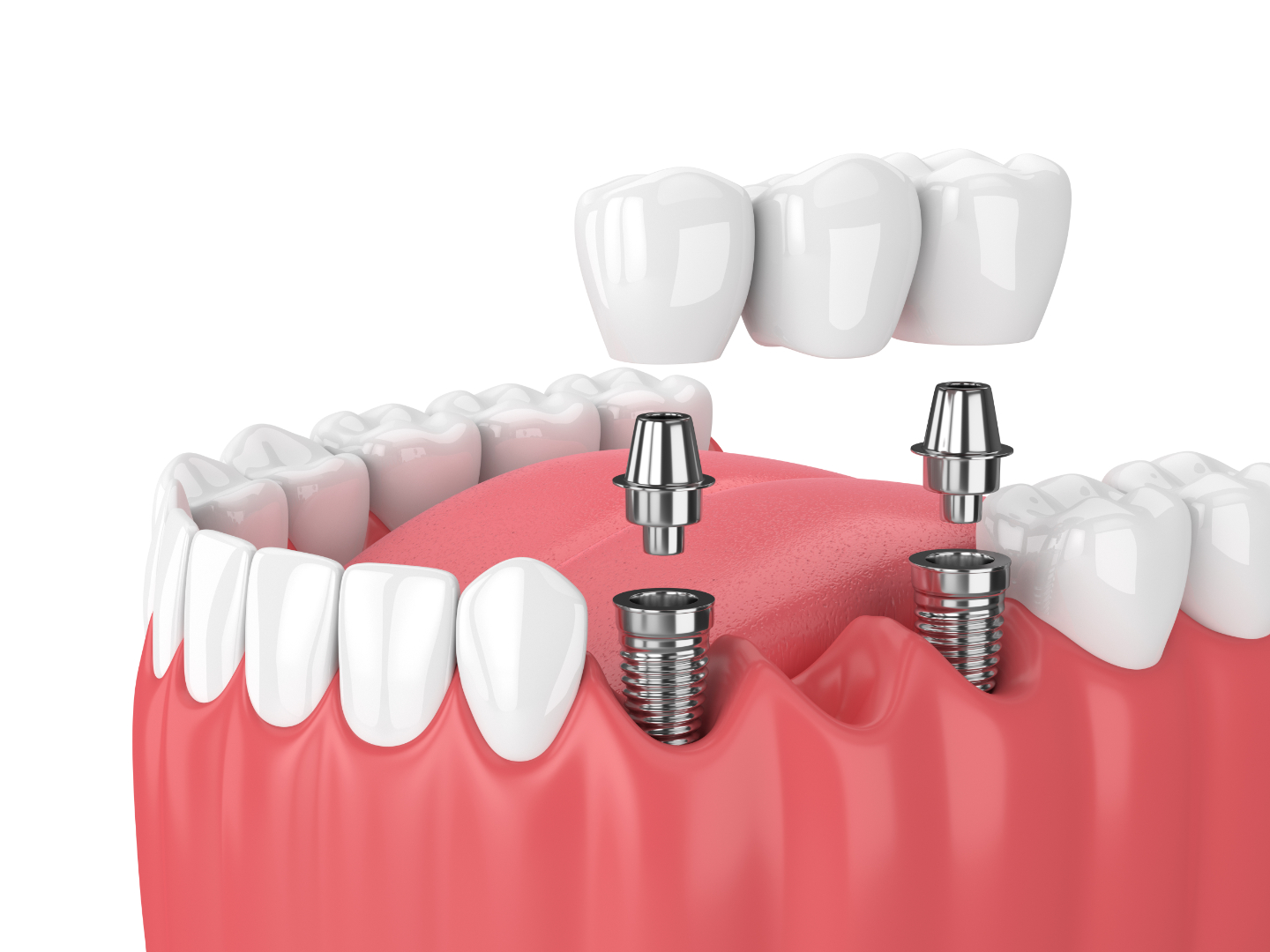
Dental implants replace missing teeth with a titanium post placed in the jawbone, a connector abutment, and a custom crown designed to look and function like a natural tooth.
Treatment Overview
An implant acts as an artificial tooth root. After placement, the jawbone heals around the titanium surface in a process called osseointegration. Once stable, the implant supports a crown, bridge, or denture depending on the number of missing teeth.
Implants may be considered for a single missing tooth, multiple missing teeth, or full-arch replacement when bone volume, gum health, oral hygiene, and medical history are suitable.
An implant crown is fixed in the mouth and does not rely on removable clasps.
Functional loading through an implant can help maintain bone in the treated area.
Implant crowns are planned for stable chewing and a natural-looking emergence from the gum.
Single implants can replace a missing tooth without cutting down neighboring teeth for a bridge.
Procedure Timeline
The dentist evaluates gum health, bite, medical history, and bone volume using clinical examination and imaging when indicated.
The implant position, crown design, need for bone grafting, and healing sequence are planned before surgery.
Under local anesthesia, the implant is placed into the jawbone with sterile surgical protocols and precise angulation.
During osseointegration, bone cells attach to the implant surface. Healing time varies by case, bone quality, and procedure complexity.
After integration, an abutment and custom crown are fitted, adjusted for bite comfort, and polished for a natural appearance.
Follow medication and rinsing instructions, avoid disturbing the surgical area, and eat soft foods as advised during early healing.
Implants need excellent plaque control. Brush, floss or use interdental aids, and attend maintenance visits to protect gum and bone health.
Regular reviews check bite forces, crown screws or cement margins, gum health, and bone levels around the implant.
FAQ
Osseointegration is the biological healing process where jawbone grows closely around the titanium implant surface, helping it become stable enough to support a crown.
Suitability depends on bone volume, gum health, oral hygiene, bite forces, smoking status, and medical conditions such as uncontrolled diabetes. A clinical assessment is essential.
Healing varies. Many implants need several months before final crown placement, especially if bone grafting or complex surgery is required.
Yes. Implants cannot decay, but the surrounding gum and bone can become inflamed if plaque is not controlled.
Personalized Dental Excellence